6 private links

NATO states and Russia are huge contributors to global emissions. We cannot resolve the climate emergency unless these emitters work cooperatively to transition their economies away from fossil fuels and toward renewable energy. Obviously, there is no realistic prospect of achieving the requisite level of cooperation and mutual trust in a state of escalating war.
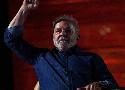
Brazilian leftist leader Luiz Inacio Lula da Silva narrowly defeated President Jair Bolsonaro in a runoff election, but the far right incumbent had not conceded defeat by Monday morning, raising concerns he might contest the result.

The US has gambled big in its latest sanctions on Chinese companies in the semiconductor industry, believing it can kneecap China and retain its global dominance. From the slogans of globalization and “free trade” of the neoliberal 1990s, Washington has reverted to good old technology denial regimes that the US and its allies followed during the Cold War.

The high-stakes game of chicken that is the Online News Act reached a new, dangerous level after the federal government closed the list of speakers on its pending Bill C-18 without inviting Meta. That prompted the owner of social network Facebook to issue a statement threatening to stop carrying links to news stories from Canada if Ottawa tries to force it to pay for doing so.

Seven years after a U.S.-planned airstrike on Hawija killed at least 85 civilians, a token of compensation has delivered little or no help to survivors.
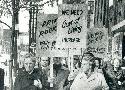
Cost-of-living adjustment clauses — which protect wages against inflation — used to be standard fare in collective agreements. By fighting to bring the COLA clause back, Canadian workers are refusing to bear the brunt of spiraling costs.
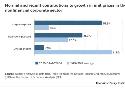
In many previous posts, I have argued the current sharp rise in inflation rates in all the major economies does not derive from so-called ‘excessive demand’; or from excessive money supply growth; or wage demands forcing companies to raise prices. It primarily relies on the failure of supply to match demand.
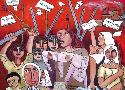
In 1979, Tanzania’s President Julius Nyerere said in the aftermath of the death of the NIEO and the birth of the Third World Debt Crisis that there was a need to create a ‘Trade Union of the Poor’. Such a political unity did not emerge at that time, nor is there any such ‘trade union’ in our time. Its construction is a necessity.
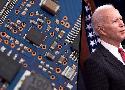
The Biden administration’s aggressive sanctions aim to “kneecap” China’s tech sector. A former Pentagon official acknowledged it is a “disproportionate” and “unilateral” attack, a “form of economic containment.”

Sean Hayes, Demi Lovato, Leslie Grossman have taken to social media to pay their respects for Will and Grace star Leslie Jordan.

Critical scholars and progressive politicians alike have today widely embraced the view that finance is a parasitical and corrosive force on the “real” industrial economy. According to this perspective, ‘financialization’ is a harbinger of the decline of American capitalism – forcing non-financial corporations to take a ‘short-termist’ outlook, and to restructure in ways that are dysfunctional to long-term economic health and stability. Yet such accounts obscure the ways in which, far from simply ‘hollowing out’ production, finance has in fact been integral to the capitalist globalization of recent decades.
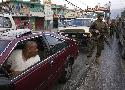
Haiti doesn’t need any more intervention from Canada or other members of the “Core Group.” In every instance, these powers have done nothing but strip away the most basic social services in the country while empowering the repressive state forces that target social resistance to poverty and underdevelopment. What Haiti needs is respect for its sovereignty and the demands of its people.

Palestinian users are once again deprived of their freedom of expression by having their content blocked on TikTok and penalizing Arabic-speaking users as part of a long systemic suppression of Palestinian voices by social media giants.

This year is the centenary of the March on Rome, the coup that brought Mussolini’s fascist party to power in Italy in 1922.
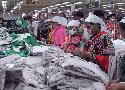
Clothing and footwear manufacturing is characterised by a globalised “value chain”, in which each phase of production is concentrated in a different region.
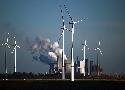
Neoliberal policymakers present “green finance” as a market-based solution for climate chaos. But the investment scenarios they’ve devised for our transition beyond fossil fuels are really a form of economic planning — one that the Left should take control of.
Elena Veduta | Monthly Review | The successes achieved by the USSR thanks to the socialist revolution of 1917—which transformed a backward, agrarian country, rich in raw materials and possessing a huge foreign debt, into an advanced scientific and technological power that determined a bipolar world—are overwhelming. However, after the counter-revolution of 1991, Russia returned to its past. It has again become a raw-material appendage of the world capitalist community and continues to slide downward.
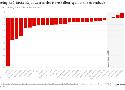
Shock therapy was the term used to describe the drastic switch from a planned publicly owned economy in the Soviet Union in 1990 to a full-blown capitalist mode of production. It was a disaster for living standards for a decade. Shock doctrine was the term used by Naomi Klein to describe the destruction of public services and the welfare state by governments from the 1980s. Now the major central banks are applying their own ‘shock therapy’ to the world economy, intent on driving up interest rates in order to control inflation, despite the growing evidence that this will lead to a global recession next year.

Anjali Appadurai, democratic socialist leadership candidate for British Columbia’s New Democratic Party, is rattling the party establishment. Her bold left-wing politics have provoked what appears to be a smear campaign by operators within the party itself.

The dreaded wage-price spiral, the price hikes thought to be the result of wage increases, is the explanation for inflation preferred by bosses. The logic behind the idea is simple: bosses’ rights to profits can never, ever be infringed on.