6 private links

At least five dead. More than two dozen others injured. The LGBTQ community again shattered. The mass shooting at Club Q in Colorado Springs late Saturday night has echoes of the June 2016 Pulse nightclub attack in Orlando, where 49 people were murdered.
Elon Musk’s inadvertent mercy killing of Twitter raises again the question – why don’t we have a social media of our own?
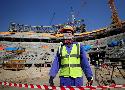
Media coverage of the World Cup has rightly highlighted the atrocious working conditions of migrant workers. But we need to broaden our definition of human rights abuses to include the global economic system that forces them to go to Qatar in the first place.

Prabhat Patnaik | In the current calendar year an estimated $200 billion has already flown out of India which amounts to a third of India’s exchange reserves.

What did the IMF find: “Wage-price spirals, at least defined as a sustained acceleration of prices and wages, are hard to find in the recent historical record. Of the 79 episodes identified with accelerating prices and wages going back to the 1960s, only a minority of them saw further acceleration after eight quarters. Moreover, sustained wage-price acceleration is even harder to find when looking at episodes similar to today, where real wages have significantly fallen. In those cases, nominal wages tended to catch-up to inflation to partially recover real wage losses, and growth rates tended to stabilize at a higher level than before the initial acceleration happened. Wage growth rates were eventually consistent with inflation and labor market tightness observed. This mechanism did not appear to lead to persistent acceleration dynamics that can be characterized as a wage-price spiral.”
I want you to understand what happened today, how it happened, and where we head from here. I committed to open and transparent communications with you – and I wish that there had been time to share with you directly first.

Nora Loreto | Passage | Labour has to fight Doug Ford’s crackdown with everything they have, and Ontarians need to be right behind the unions.

John Clarke | Canadian Dimension | We are dealing with more than the biases of individual cops or a right-wing police culture. The institutions of enforcement serve and protect capitalist interests and this shapes their conduct fundamentally. They will always take the side of employers against workers, oil companies over environmentalists and resource extraction over the rights of land defenders.

The international left should affirm Iranian protesters’ feminist and democratic message of “Women, Life, Freedom.” If we don’t, we risk ceding the public discourse to neoconservatives and liberal hawks who will use the protests for their own purposes.

Giorgia Meloni, like many in the Italian far-right, is a Lord of the Rings obsessive – raising questions about what it is in Tolkien's work that seems to appeal to fascists.

An Australian university has unearthed millions of Tweets by fake ‘bot’ accounts pushing disinformation on the Ukraine war.
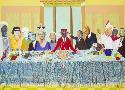
At its annual summit in June, NATO named Africa along with the Middle East ‘NATO’s southern neighbourhood’. On top of this, NATO’s Secretary General Jens Stoltenberg ominously referred to ‘Russia and China’s increasing influence in our southern neighbourhood’ as a ‘challenge’. The following month, the outgoing commander of AFRICOM, General Stephen J Townsend, referred to Africa as ‘NATO’s southern flank’. These comments are disturbingly reminiscent of the neocolonial attitude espoused by the Monroe Doctrine of 1823, in which the US claimed Latin America as its ‘backyard’.

Steve Ellner says opposition to NATO’s stance on Ukraine has created fertile ground for the expansion of a bloc of non-aligned nations, now with a progressive possibly at the helm.

For the 30th year in a row, almost every country on Earth voted at the United Nations General Assembly to oppose the illegal six-decade US blockade of Cuba. 185 nations voted against just two: the United States and Israel.

We are waiting for a response from the Council of Trustees’ Associations (CTA) and the Ford government and remain at the table willing and ready, as we have been for the last five months, to negotiate a collective agreement that responds to the needs of students, parents, and workers.

Details:
EMERGENCY RALLY
Tuesday, November 1 @ 5:00 p.m.
Ministry of Labour, 400 University Avenue
TTC: St. Patrick | Map
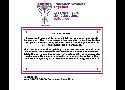
This strong arm tactic would deny education workers the ability to negotiate for good jobs, better wages, and improvements to the services students rely on every day. This chart provides a brief outline of what the government is threatening to impose and what it means for workers, parents, and students.
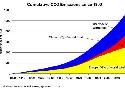
Even as Xi Jinping was promising China’s Communist Party’s national congress that China would “resolutely win the battle” in key areas of technology, employees of technology companies in China and elsewhere were being told to down tools. Dozens of the hundreds of executives and engineers with US citizenship or green cards who work in or with China’s semiconductor sector, many of them born in China, have been told by their employers – whether those are foreign or Chinese companies – to stop work while their employers seek clarification of a new US rule that bars US citizens and residents from supporting China’s advanced chip-making industry without a licence.
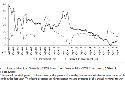
The reason that Western analysts are so sceptical of the Chinese model is that they are seeped in a different economic model for growth. They are convinced that China can only be ‘successful’ (like the economies of the G7!) if its economy depends on profitable investment by privately-owned companies in a ‘free market’. And yet the evidence of the last 40 and even 70 years is that a state-led, planning economic model that is China’s has been way more successful than its ‘market economy’ peers such as India, Brazil or Russia -and even the G7.
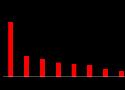
The antagonism to Xi and the current leadership is less to do with the lack of democracy and one-party rule in China – the Western pundits and international agencies seldom mentioned that in their past analyses of China before Xi took over. The strong antagonism now is really to do with two things: 1) under Xi, China’s economic policy has emphasised state control and a reduction of the sway of the capitalist sector; and 2) under Xi, China is resisting to being contained and squeezed by US imperialism in its escalating attempt to stop China’s progress as a major rival in trade, technology and global influence.