6 private links

By Nathan J. Robinson & Noam Chomsky | The United States’ destruction of Iraq remains the worst international crime of our time. Its perpetrators remain free and its horrors are buried.

With long experience of chaos, violence, and dysfunctional governance, Haiti looks now to be on the verge of a new crisis in the form of foreign military intervention. U.S. and United Nations decision-makers have held back, but now they look to be moving, again.

From the onset of the post-COVID surge in inflation, Canada’s new breed of right-wing populists has worked hard to pin the blame for higher prices on the federal government. They rightly sense anger about the impact of inflation on their living standards. But they hope to divert that anger into outrage at Justin Trudeau personally, and his government more generally.

Lula da Silva used his state visit to Britain to champion the interests of the Global South, urge diplomacy over militarism and condemn the persecution of Julian Assange – a sign of Brazil’s new role on the world stage.

The far right’s victory in elections for the Constitutional Council may be the death knell for a progressive constitution in Chile. It’s also a needed wake-up call for the Chilean left.
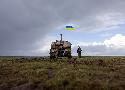
China’s recent pledge to send a peace delegation to Ukraine in the hope of resolving the country’s ongoing war with Russia is a hopeful sign the bloody conflict may soon come to an end. But the US’s general hostility to Chinese peace initiatives suggests there may be serious limitations to Ukrainian sovereignty. The choice between continuing the conflict, or suing for peace, may not be Kyiv’s to make.

If you are reading this newsletter on your smartphone, then you should know that this tiny instrument has billions of miniscule transistors that are invisible to the human eye. The scale of the developments in digital technology is staggering. Earlier conflicts took place over energy and food, but now this conflict has heated up over – amongst other matters – the resources of our digital world. This technology can be used to solve so many of our dilemmas, and yet, here we are, at the precipice of greater conflict to benefit the few over the needs of the many.

'The threat to privacy and data security posed by language models like ChatGPT is real enough. I frankly doubt that there's any practical way to contain them. The most effective means that I can think of…to counter the spread of malicious doctrines and ideology are education in critical thinking, organization to encourage deliberation, and modes of intellectual self-defense.' —Noam Chomsky

In an interview with The Breach, the scholar discusses Canadian imperialism, the dangers of NATO and building a better future
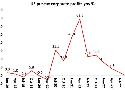
So-called ‘core inflation’ (excluding food and energy) remains ‘sticky’, so that even in a slump, inflation rates are likely to stay above the average rates prior to the pandemic slump. But it’s the slump that will end high inflation (as it did in the early 1980s), not interest-rate hikes or price controls.

The late historian Eric Hobsbawm recounts the history of International Workers' Day.
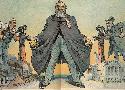
Capitalism is built on the meritocratic idea that everyone gets what they deserve in the marketplace. This May Day, let’s reject that idea — wealth creation is a fundamentally social process, and the rich have no right to hoard all the resources and power.

Water protectors, environmentalists, and scientists are campaigning to stop Canada's plan to release treated tar sands tailings waste into the Athabasca River
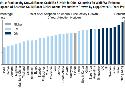
Will LLMs be a game changer for capitalism in this decade? Will these self-learning machines be able to increase the productivity of labour at an unprecedented rate and so take the major economies out of their current ‘long depression’ of low real GDP, investment and income growth; and then enable the world to take new strides out of poverty? This is the claim by some of the ‘techno-optimists’ that occupy the media.
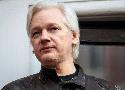
Lawmakers around the world are again calling on the US to halt its unprecedented prosecution of WikiLeaks founder Julian Assange. For the first time, they are being joined by US congressmembers, led by Rashida Tlaib.

The Tricontinental | Dossier no. 63 explores the origins of the debt crisis in Africa, exposing the Western financial chokehold as its source and exploring what alternatives can be built.

States, faced today with the international economic crisis articulated with the consequences of the climate and health crises, should invoke the “fundamental change of circumstances” to stop reimbursing their creditors in order to come to the aid of their populations. Because, ultimately, human rights must effectively prevail over creditors’ rights.
In an interview with The Hindu, Ghosh talks about gender blindness of official policies, inequalities in society, the state of women empowerment and why women face multiple disadvantages in India.
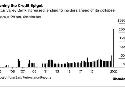
If the current banking crisis becomes systemic, as it did in 2008, there will have to be ‘socialization’ of the losses suffered by the banking elite through government bailouts, driving up public sector debts (already at record highs); all to be serviced at the expense of the rest of us through increased taxation and yet more austerity in public welfare spending and services.

In Finland, the coalition led by centre-left Sanna Marin was defeated after promising utopian visions but failing to materially improve people’s lives – providing an important lesson to the global Left about delivering change and remaining relevant.