The Daily Shaarli
July 28, 2022
Financial markets in the so-called ‘emerging economies’ are in turmoil. At the end of May 2022, the Financial Times reported that the return delivered by emerging market (EM) sovereign bonds was around minus 15 per cent for 2022, the worst since 1994.

The ECB is caught in what one analyst called a “nightmare scenario”. The deputy head of the Brussels-based Bruegel economic think tank, Maria Demertzis said, “The risk ahead of us is that because of the energy crisis, the euro area could end up in recession, while at the same time the ECB will have to keep raising rates if inflation does not come down.” Krishna Guha, head of policy and central bank strategy at US investment bank Evercore, said: “The combination of a brewing giant stagflationary shock from weaponised Russian natural gas and a political crisis in Italy is about as close to a perfect storm as can be imagined for the ECB.”

$130 million deal with a shadowy company controlled by crown prince Mohammed bin Salman a sign of normalizing ties with Saudi regime
This interview is part of a series with the Blended Finance Project a group of unions, non-governmental organizations and academics who are concerned about the Canadian government’s embrace of what is called “blended finance.” We argue that blended finance is merely the latest iteration of the privatization and financialization of foreign aid and seek to engage others in Canada and around the world to propose more equitable public alternatives.
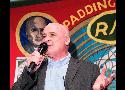
Tribune sits down with the RMT’s Mick Lynch to discuss the national rail strike, his viral television appearances – and how workers can come together to topple Britain’s super-rich elite.
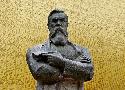
In 1872, Friedrich Engels wrote The Housing Question, tying the working class’s perpetual housing crisis to the free market in Victorian England. The century and a half of housing crises since have proved Engels correct.
The return of high inflation after the global pandemic poses a major political and analytical challenge for labour and the left. On top of cuts to real wages resulting from the wide gap between inflation and pay, high and rising inflation has led central banks, including the Bank of Canada, to hike interest rates sharply. This is raising the debt servicing costs of households, businesses and governments and making new borrowing more expensive.

Can democracy live on here if dictatorship fully wins the day south of the border? The biggest obstacle is what’s in our heads. It is ingrained among Canadians that the United States is our greatest friend and will always champion democracy. That can no longer be taken for granted. Can we pivot to seeing the US as our biggest potential threat?

John Clarke | The politics of Pierre Poilievre are a very major threat but they are also a symptom of societal crisis and the lack of a fighting response on the left. Poilievre won’t wait for the next election to start spreading his poison.