The Daily Shaarli
August 9, 2021
The Working Group I contribution to the Sixth Assessment Report addresses the most up-to-date physical understanding of the climate system and climate change, bringing together the latest advances in climate science, and combining multiple lines of evidence from paleoclimate, observations, process understanding, and global and regional climate simulations.
CAUT has released the Fall 2021 semester back-to-school plans for 120 universities and colleges as part of its ongoing efforts to track how post-secondary institutions are managing during the COVID-19 pandemic.
On July 4, Richard Lewontin, the dialectical biologist, Marxist and activist, died at the age of 92, just three days after the death of his wife of more than 70 years, Mary Jane. He was one of the founders of modern biology who brought together three different disciplines—statistics, molecular biology and evolutionary biology—that mark the discipline today. In doing so, he not only battled crude racism masquerading as science, but also helped shed light on what science really is. In this sense, he belongs to the rare group of scientists who are equally at home in the laboratory and while talking about science and ideology at a philosophical level. Lewontin is a popular exponent of what science is, and more pertinently, what it is not.
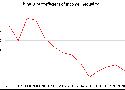
The basic contradiction of China’s economy is not between investment and consumption, or between growth and debt; it is between profitability and productivity. The growing size and influence of the capitalist sector in China is weakening the performance of the economy and widening the inequalities exposed during the pandemic. Indeed, it was the state sector that has helped the Chinese economy climb out of the pandemic slump, not its capitalist sector.

The policy by the funder, UK Research and Innovation (UKRI), will expand on existing rules covering all research papers produced from its £8 billion in annual funding. About three-quarters of papers recently published from U.K. universities are open access, and UKRI’s current policy gives scholars two routes to comply: Pay journals for “gold” open access, which makes a paper free to read on the publisher’s website, or choose the “green” route, which allows them to deposit a near-final version of the paper on a public repository, after a waiting period of up to 1 year. Publishers have insisted that an embargo period is necessary to prevent the free papers from peeling away their subscribers.