The Daily Shaarli
March 18, 2021

The Left Democratic Front government in Kerala has impressively confronted a series of serious crises. Organising alongside powerful social movements like the All-India Democratic Women’s Association, the communist-led state has implemented significant change through redistribution programmes, infrastructural development, and economic transformation. Ahead of India’s assembly elections, we spoke with Kerala’s Finance Minister T. M. Thomas Isaac to learn more about the strategies and actions taken up by the government.
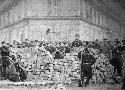
150 years ago today, in the jaws of defeat in war, a revolutionary militia took over the city of Paris and began an experiment in democratic government – the Commune they built continues to inspire radicals today.

Before the outbreak, the caring economy accounted for more than 12 per cent of Canada’s GDP and 21 per cent of all paid jobs, a virtual economic engine. Afterward, we’ll need more care workers, and we’ll need to replace workers who are aging out of these sectors. What’s the plan to ensure our quality of life doesn’t deteriorate? What’s the plan to value the people we know are essential to our well-being?
Today is the 150th anniversary of the beginning of the Paris Commune. The Commune (Council) was formed as result of what should be considered the first uprising and revolution led by the working class in history. This new class was the product of the industrial revolution in the capitalist mode of production that Marx and Engels first spoke of most prominently in the Manifesto of the Communist Party published in March 1848.

On this day in 1871, the working class of Paris seized control of the capital and established the Commune. Though it ruled for just two months, the world’s first workers’ government still stands as a vivid example of the kind of society workers themselves can create, according to their own vision of freedom and equality.

March 18 marks the 150th anniversary of the Paris Commune, the first workers’ government. To learn about the Paris Commune is to learn an incredibly important part of our history. We learn about the savagery of the ruling class when it is under attack, and we are inspired by the courage, vision, and internationalism of the Communards.
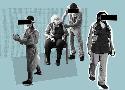
But just how many temporary workers have been deployed to the COVID-19 front lines? Nobody knows — not even the provincial ministry overseeing long-term care. While temp workers have played a crucial role in keeping the health system afloat, there is almost no official accounting of who they are, where they have worked, or how qualified they are.
They are uncounted.
“They’re an invisible workforce,” said Dr. Nathan Stall, a geriatrician and researcher at Sinai Health System. “These workers are poorly paid, aren’t afforded the same protections, are likely afforded little to no actual training (before) entering these outbreak situations that they’re thrust into.
“(But) if you’re an invisible workforce, you can neither capture data on them, nor can you afford them the protection they deserve.”