The Daily Shaarli
December 8, 2020

The great development of Marxist ecological thought in recent years—which has shown how, despite writing in the nineteenth century, Marx is essential for reflecting on our contemporary ecological degradation—is in part the product of a turn carried out by Foster and others linked to Monthly Review. His current, which came to be known as the school of the metabolic rift due to the central notion Foster rescued from volume 3 of Marx’s Capital, has developed numerous ecomaterialist lines of research in the social and natural sciences—from imperialism and the study of the exploitation of the oceans, to social segregation and epidemiology
On November 17, 2020, the Federal Government unveiled the most sweeping consumer privacy law reform in the last twenty years with the proposed Digital Charter Implementation Act, 2020 (Bill C-11). The Act would repeal and replace parts of the Personal Information Protection and Electronic Documents Act, SC 2000, c 5 (PIPEDA) with a new private sector privacy statute, the Consumer Privacy Protection Act (CPPA) (not to be confused with the well-known California Consumer Protection Act (CCPA)), and would enact the Personal Information and Data Protection Tribunal Act (Tribunal Act). The Bill makes good strides in modernizing Canada’s privacy legislation. It is also, in the end, a missed opportunity for more profound law reform.
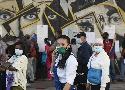
AS POLLS closed for Venezuela’s National Assembly elections the overall political situation became clearer. The progressive pole that embodies the enduring legacy of the late president Hugo Chavez enjoys a clear majority.

The phone lines for the National Student Loans Service Centre have been clogged since a pandemic-induced moratorium on student loan collections lifted at the end of September, the agency said, pointing to a message on its website warning about long wait times and dropped calls.

Trade unions are the voice of working people in all our diversity. So we have a special responsibility to step up. To do that, we need to understand how the far-right has mainstreamed its messages, worked across national borders and used online spaces to organise, recruit and promote its hateful ideologies.

Now at a time of acute health and economic crisis, widening divisions are raising moral, social, economic, and political challenges. Many experts argue that longstanding US policies that widened inequality have also exacerbated the pandemic's impact. As the United States and other countries strive to rebuild their economies, governments have an opening to alleviate unfair economic disparities and improve access to opportunities.

Students protesting the University of Ottawa's response to anti-Black racism say they will not end a sit-in at the administrative offices until they're granted a meeting with the school's president.

Over the past year, members of The Freelance Solidarity Project (NWU) and The Intercept have been collaborating to create a set of shared principles for freelance digital media workers. Today, we are proud to present our unilateral announcement of those principles. The complete document can be reviewed on The Intercept’s website. They are designed to cultivate an equitable, professional relationship between all kinds of digital media workers — including but not limited to writers, researchers, transcribers, photographers, artists, video producers, and/or audio producers — and the online news publication.