6 private links
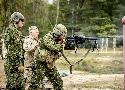
Russian President Vladimir Putin, you may have heard, has amassed 100,000 troops on the border with Ukraine, a country within which there is a significant Russian minority. We’re told that, as a NATO member, Canada must step up military assistance or suffer consequences, ignoring what exactly we’re doing in Ukraine and its consequences. That Canada must participate in NATO’s hostile encirclement of Russia is taken as a foregone conclusion.
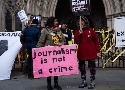
The high court has certified only one ground of appeal, leaving Julian Assange’s defense team 14 days to file for permission to appeal at the UK supreme court

By Ramzy Baroud | Facebook’s involvement in Israel’s efforts aimed at silencing Palestinian online voices that call for justice, freedom and end of the occupation, is itself situated in an agreement the company had reached with Israel in September 2016. Then, the Israeli government announced that it had signed an agreement with the social media giant “to work together to determine how to tackle incitement on the social media network.” Within days, the accounts of prominent Palestinian journalists and activists were reportedly being deleted.
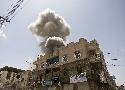
Canada’s involvement in the war on Yemen can be explained in two words: blood money
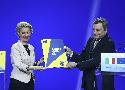
Former European Central Bank chief Mario Draghi’s government has been widely hailed for using EU funds to invest Italy’s way out of crisis. Yet while the plan promises big spending, it’s mainly a transfer of public resources to private business.
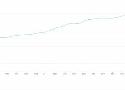
Without swift and focused action, truly catastrophic events—events that could end civilization as we know it—are more likely. When the Clock stands at 100 seconds to midnight, we are all threatened. The moment is both perilous and unsustainable, and the time to act is now.
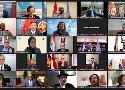
China is leading an international effort to develop alliances to counter U.S. hegemony.
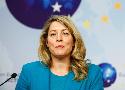
Foreign Affairs Minister Mélanie Joly is striking an unusually hawkish tone in her comments about the standoff. Is this the best path for Canada?

Marco D'Eramo | Sidecar | What’s funny is that this growing web of sanctions undermines the very fabric of globalization, precisely because it places insurmountable obstacles in the way of the free circulation of commodities and, most of all, of capital. We could almost say that at this rate, the US will end up sanctioning itself.
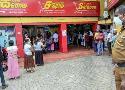
After its foreign currency reserves dropped to USD 1.6 billion in November last year, Sri Lanka’s economic crisis has snowballed at an alarming rate with acute shortage of essential commodities, food and fuel
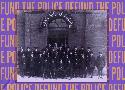
An interview with Tari Ajadi, co-author of Halifax’s new report envisioning how to defund and “detask” the police
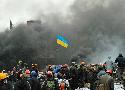
The question of which side carried out the 2014 Maidan massacre is central to understanding the “bloodiest and most controversial hours of European conflict since the end of the Cold War,” and the main tipping point in the escalating conflict between the West and Russia over Ukraine. According to Ivan Katchanovski, the origins of the conflict are often misrepresented, omitted or even covered-up.
As NATO meets to discuss the tension on the Russian border to Ukraine, and the papers fill with denunciations of Putin’s aggression, I still find it useful to return to the framework I developed in Crashed for analyzing the intersection of geopolitics and economics and the rise of Russia as a challenger. This framework consists of three basic propositions.

German engineering giant Bosch is mounting massive layoffs in the name of adapting to the electric car market. But workers insist the move is really about increasing profits — and climate protesters have joined the fight to save their jobs.
A new report reveals the breathtaking extent of global inequality — and the vast progress that a global wealth tax could underwrite in areas like child poverty and climate change.
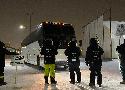
While Canadian workers took to picket lines to agitate in the face of the hardships brought on by the pandemic, Canadian businesses collected COVID benefits intended for the very employees they laid off.
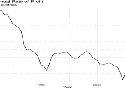
Marx’s law of the tendency of the rate of profit to fall (LTRPF) has either been heavily criticised or ignored as being an irrelevant explanation of crises under capitalism, both theoretically and empirically. The critics are not from mainstream economics, who generally ignore the role of profit in crises altogether. They partly come from post-Keynesian economists who look to ‘aggregate demand’ as the driver of capitalist economies, not profit. But the biggest sceptics come from Marxian economists.
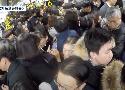
Private financiers of Line 9 also used the conservative ridership estimates to cut costs wherever they can. Line 9 was already proving more expensive to construct than its predecessors for its inclusion of express service with extra tracks and rail equipment, and acquisition of the most expensive land in Seoul, according to Donga Weekly.18 The underestimated ridership predictions gave the financiers green light to reduce its rolling stock size from the original 186 cars (31 6-car trains) to 144 cars (36 4-car trains). As the other eight Seoul Metro lines operated 8-car trains, Line 9 began by running exclusively 4-car trains.
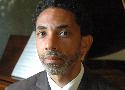
There is a long history of right-wing forces fighting against progressive educational curricula. Now, scholars like Robin D. G. Kelley are working to level the playing field against the moneyed political interests behind the attacks.
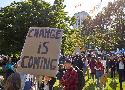
As rents continue to spiral out of control amidst multiple intersecting societal crises, is Vancouver ready for a political revolution? Some local socialist organizers think so, and they’re making plans to elect some of their own to City Hall.