6 private links

In law and public policy, arguments against adopting an action due to its inevitable future effects are known as “slippery slope” arguments. More worrisome in public policy are slippery slope events, which commence an unstoppable descent toward an undesired result. Canada’s foray into Internet regulation may be well-intended, but it risks opening a Pandora’s Box and running afoul of the Law of Unintended Consequences.

Gustavo Petro’s election victory in Colombia is a major blow to Justin Trudeau’s bid to bolster reactionary and pro-Washington governments in the hemisphere. Sunday’s presidential vote strengthens the socialist and regional integrationist forces Ottawa has sought to undercut. An ex-rebel fighter, Petro is widely considered Colombia’s first ever left wing leader.

The world of credit is tightening and bringing with it a downturn in financial asset prices, but also exposing the fault-lines in ‘real economy’ production. As the FT put it in an editorial this week:“ the choice is stagflation, or deflationary depression.”

To Wall Street and its backers, the solution to any price inflation is to reduce wages and public social spending. The orthodox way to do this is to push the economy into recession in order to reduce hiring. Rising unemployment will oblige labor to compete for jobs that pay less and less as the economy slows.

Last week (June 8-10) there were two summits in Los Angeles, California: the Summit of the Americas hosted by the U.S. State Department and the Peoples Summit hosted by U.S. and international activist organizations. The two summits were held in the same city at the same time but could not be otherwise more different.

Gustavo Petro won Colombia's June 19 election to become its first left-wing president. Benjamin Norton analyzes what this means for Latin America, the US, Venezuela, the military, paramilitary groups, the powerful oligarchy, and social movements.
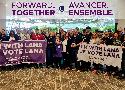
Forward, together.

AnUS-led sanctions are inadvertently undermining the dollar’s post-Second World War dominance. The growing number of countries threatened by US and allied actions is forcing victims and potential targets to respond pro-actively.

Locked in a cycle of Slack callouts and healing retreats, left-wing groups — from reproductive rights to climate to racial and economic justice — have brought themselves to a grinding halt.

The World Bank outlines the crisis conditions enveloping global capitalism. The question before us is who will pay for the coming recession.

Could taxing excess profits of grocery chains and other corporate profiteers help with an affordability crisis?

Governments are trying to convince us that privatization and so-called public-private partnerships (P3s) are solutions to the climate crisis. But don’t believe the hype. As the Council of Canadians has written previously, P3s delay climate action, cost more, deliver less, and lack accountability. Privatization isn’t a climate solution; it’s climate injustice. Here are six reasons why.

From the start of Russia’s invasion of Ukraine, Western media have systematically misrepresented developments on the battlefield. Time and again, major media organizations have cited military ‘experts’ from NATO armies and officials from Western governments to support the false claim that Ukraine is either winning the war or has battled Russian forces to a standstill.

The scissor blades between falling profitability and rising debt costs are closing and will eventually cut investment, jobs, prices and wages.
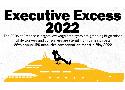
Throughout the pandemic, essential workers have labored heroically. But while workers risked their lives, bosses have reaped the rewards.
In our last report, we found that more than half of our nation’s 100 largest low-wage employers changed their own rules to ensure huge payouts for CEOs in 2020 — while workers lost wages, jobs, and even their lives.

In news headline after news headline, we’ve seen how Sask. Party P3 schemes like the Regina Bypass, 9 joint-use schools, and North Battleford’s Saskatchewan Hospital have cost Saskatchewan people more as private projects than if we’d kept them fully public.
For these reasons and more, CUPE Saskatchewan is demanding an immediate end to all forms of privatization in the province.
Send a message to Scott Moe and your MLA to demand an end to all privatization schemes as well as the restoration and protection of all Saskatchewan Crowns and public services.

Worker-owned businesses model solutions to inequality and climate crisis—now they’re demanding greater government backing

On May 15, Palestinians mark Nakba Day ("the catastrophe" in Arabic), to remember the mass expulsion of Palestinians that accompanied the creation of the state of Israel.

To sustain capitalism, otherwise competitive businesses have to do something unnatural: cooperate with each other. The state plays a crucial role in fostering this class discipline. We, on the other hand, have to build our own power.

Under capitalism, technological progress will always benefit the rich first and society later – if we want technology to address the major problems of our time, we need it to be shaped by workers.