6 private links
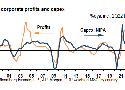
What I have called in the past, the scissors of slump (rising interest rates and falling profits), are beginning to close. Why does tracking the change in the profits of the capitalist sector globally matter? As I have argued in numerous places, profits are the driving force of capitalist investment and therefore employment and income growth. If the profitability of capitalist investment falls and eventually leads to a fall in total profits, it is the strongest indicator of an impending slump in capitalist production. The close (if lagged) relationship between profits and investment is well established by several studies including my own.
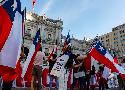
Chile’s new constitution would’ve replaced its Pinochet-era charter with one that guarantees social, economic, and environmental rights for all. Why, then, did Chileans overwhelmingly reject it?
Nathan J. Robinson & Noam Chomsky | War between nuclear-armed powers should be unthinkable. The deterioration of U.S.-China relations threatens the whole world, and treating China as an enemy is suicidally deranged.

Why do we allow such huge concentrations of capital to remain in private hands when we face multiple existential threats?

If we accept that life expectancy is a good measure of human development, the latest data are revealing about capitalist societies in the 21st century.
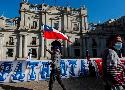
For Chileans who resisted Augusto Pinochet’s regime, the election of left-wing president Gabriel Boric offered hope. Yet the rejection of a proposed new constitution threatens to hobble his government and reverse the democratic breakthrough of recent years.
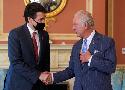
Even though most Canadians would prefer an elected head of state, Charles III is the country’s new king. But enduring monarchism does suit Canadian elites, whose worldview is sustained by the idea of inherited privilege and power embodied by the crown.

Justin Trudeau’s recent housing initiative announcement was better than nothing but woefully inadequate to the scale of Canada’s housing crisis. We need social housing now.

Pinochet and his legacy have proven hard to kill. The 2022 draft constitution – the most progressive constitution ever written in terms of socio-economic rights, gender equality, indigenous rights and the protection of nature – was rejected by almost 62% of voters in a national plebiscite on 4 September. How could Chileans, after rising up in October 2019 to demand a new constitution, then voting by an overwhelming majority to initiate the constituent process, reject the proposed draft? Why would they align with right-wing forces seeking to preserve the Pinochet constitution? This astonishing result surely demands a multi-causal explanation. Here I will focus on two of the most prominent ones: the right-wing disinformation campaign across traditional and social media, and the exclusion of the popular sectors from the constituent process, which I have highlighted in previous analyses.
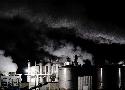
In 2007, the U.S. Congress mandated the blending of biofuels such as corn-based ethanol into gasoline. One of the top goals: reducing greenhouse gas emissions.

Following a neutrality agreement that benefits CWA, union officials killed a report critical of Microsoft.
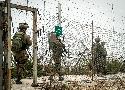
In recent months, prominent human rights authorities and advocates have all concluded that Israel is guilty of the crime of apartheid. It is therefore incoherent for the NDP to echo these findings and simultaneously participate in a group promoting “co-operation” with Israel. It’s time for the party to formally disassociate from the Canada-Israel Interparliamentary Group.

Barbara Ehrenreich was driven by both her undying anger at the profound injustices of life under capitalism and a fervent hope that the world doesn’t have to be this way.

The Chilean people demonstrated at the ballot box against the proposal of the new Constitution of Chile, with an unappealable result, according to the final official bulletin of the Electoral Service of Chile (Servel) with a 62% rejection of the constitutional project against a 38% of approval; the vote was mandatory, hence the participation has exceeded 13 million voters.
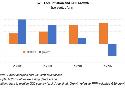
And the IMF notes, “The global outlook has already darkened significantly since April. The world may soon be teetering on the edge of a global recession, only two years after the last one.” Jacon Frenkel, head of the Group of 30 consortium of global policy makers summed it up: “We have the energy crisis, we have the food crisis, we have the supply chain crisis and we have the war, all of which has profound implications for the economic performance of the world’.
The Postil | We are pleased to bring you this fresh interview with Jacques Baud, in which we cover what is now happening in the geopolitical struggle that is the Ukraine-Russia war. As always, Mr. Baud brings deep insight and clear analysis to the conversation.

Prabhat Patnaik | Economists distinguish between two kinds of inflation: “demand-pull” and “cost-push”. But no matter what kind of inflation we are talking about, it can always be controlled at the expense of the working class; and, what is more, under capitalism it is invariably controlled at the expense of the working class.
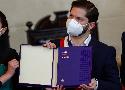
Today Chile votes on a new constitution. Chileans have a chance to replace Pinochet’s document with one that guarantees social, economic, and environmental rights, and to bury the legacy of neoliberalism once and for all.

The Right broke Ontario’s health care system. Now they can’t wait to replace it with a parallel, two-tiered system that benefits the rich.
The COP 27 UN Climate Conference will be held in Sharm El Sheikh, Egypt this November. Three obstacles to climate justice must be addressed: right-wing climate denialism, the vested interests of the energy sector, and Western countries’ refusal to admit their responsibility for the problem and repay their climate debt to the Global South. While debates tend to revolve around various Green New Deal concepts, we must move beyond simply trying to save capitalism and build a new system.