6 private links
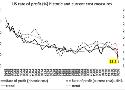
During the year of the COVID, global consumer and producer prices dropped fell. In some manufacturing-based economies, there was even a fall in price levels (deflation) eg the Euro area, Japan and China).

In the previous part of this article we saw that the Indian rulers are actively preparing the legal groundwork for parting peasants from their land. In the following part we place this in an international context.
The world economy is witnessing an intensifying drive by international investors to get control of land, including agricultural land, in the Third World. Why is this so?

Over the last two decades, international agencies and the Indian government have explicitly been preparing the ground for transfer of the lands of poor peasants. They term this the creation of “vibrant land sales markets” for farmers who “find their lands too small to be a viable source of livelihood.” In pursuit of this aim, the Indian government is trying to establish a system of ‘conclusive titling’ of all land in the country, whereby the State would permanently guarantee the title of the title-holder against any other claimants.

Economic researchers at the Institut de Recherches Économiques et Sociales in France indicate that global commodity chains have three different elements: (1) a production element linking parts and commodities in complex production chains; (2) a value element, which focuses on their role as “value chains,” transferring value between and within firms globally; and (3) a monopoly element, reflecting the fact that such commodity chains are controlled by the centralized financial headquarters of monopolistic multinational corporations and garner massive monopoly rents, as theorized by Stephen Hymer in the 1970s.

Michael Roberts Blog | Mainstream economics cannot deliver even on its own terms because it makes two basic assumptions that are not based on reality; one in so-called ‘microeconomics’ and one in so-called ‘macroeconomics’. As a result, mainstream falls down as a scientific analysis of modern (capitalist) economies.

The U.S. economy and society at the start of 2021 is more polarized than it has been at any point since the Civil War. The wealthy are awash in a flood of riches, marked by a booming stock market, while the underlying population exists in a state of relative, and in some cases even absolute, misery and decline. The result is two national economies as perceived, respectively, by the top and the bottom of society: one of prosperity, the other of precariousness. ... Comprehending the basic parameters of today’s financialized capitalist system is the key to understanding the contemporary contagion of capital, a corrupting and corrosive cash nexus that is spreading to all corners of the U.S. economy, the globe, and every aspect of human existence.
Utsa Patnaik | The farmers’ movement for the repeal of the three farm laws which affect them closely but have been rammed through without consulting them, has now entered its second month. It is of historic significance. It is not just about minimum support prices but also about the survival of the entire system of public procurement and distribution of foodgrains. Without ensuring the economic viability of foodgrains production in North India — the grain basket of the country — no continuity can be ensured for the public procurement and distribution system, which, despite its drawbacks, continues to provide a modicum of food security to vast numbers of our population.
Canada at a Glance presents current statistics on Canadian demography, education, health and aging, justice, housing, income, labour market, household, economy, travel, finance, agriculture, international trade and environment. Updated yearly, this booklet is a very useful reference for those who want quick access to current Canadian statistics and important international comparisons.

The U.S. unemployment rate is likely to hit 16% or higher in April, and "really big thoughtful policies" will be needed to rebuild confidence, a White House adviser said on Sunday.